
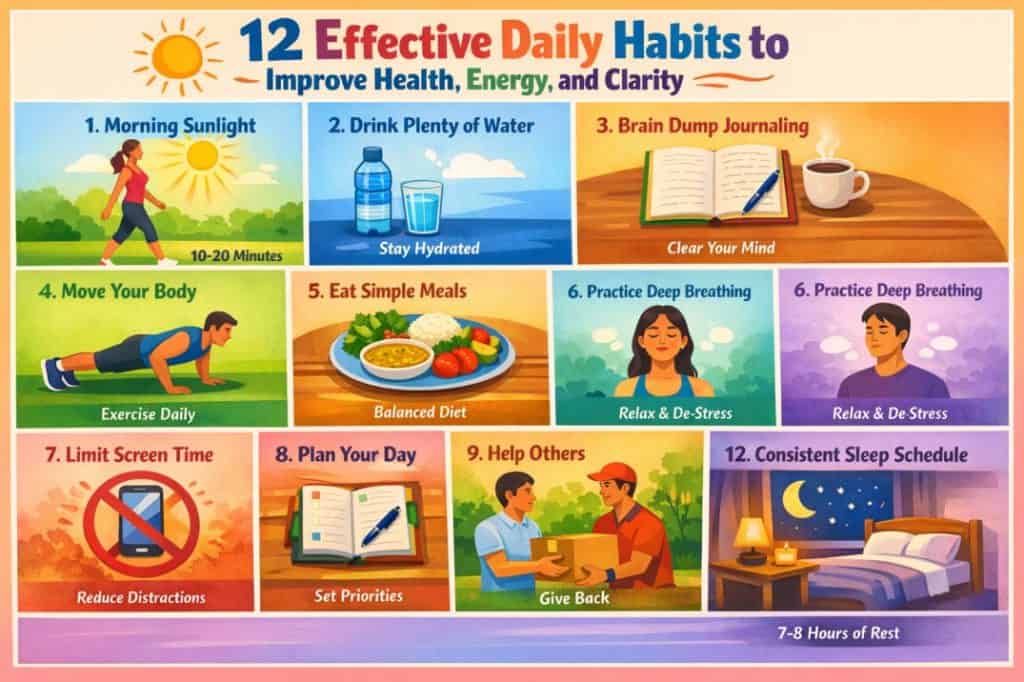

1. Wake With Consistency, Not Urgency
A stable wake-up time trains the body to regulate hormones, digestion, Energy, and focus naturally to Improve Health. Constantly changing sleep and wake times disrupts internal balance, even if total sleep hours seem sufficient.
Instead of rushing into activity, allow a few moments to wake consciously. This small pause reduces stress signals in the nervous system and improves mental readiness for the day ahead to Improve Health. Consistency matters more than waking early.
2. Rehydrate the Body Before Demanding Energy

During sleep, the body loses water through breathing and cellular repair to Improve Health. Starting the day dehydrated often leads to fatigue, headaches, and poor focus that people mistakenly treat with caffeine.
Drinking water soon after waking supports circulation, digestion, and mental alertness. This simple habit improves energy naturally and reduces dependence on stimulants throughout the day to Improve Health.
3. Move Gently Before You Move Intensely
The body responds best when movement begins gradually to Improve Health. Gentle morning motion-such as stretching, walking, or mobility exercises-prepares joints, muscles, and the nervous system for the day.
This approach reduces stiffness, improves posture, Energy, and lowers the risk of injury. Daily movement should feel supportive, not punishing. Over time, consistency in moderate activity produces far better health outcomes than irregular intensity.
4. Eat for Sustained Energy, Not Short Comfort

Daily food choices directly affect energy levels, mood stability, and mental clarity to Improve Health. Meals that rely heavily on refined sugar or processed ingredients create energy spikes followed by crashes.
A supportive daily routine includes meals that balance:
- Natural carbohydrates for fuel
- Protein for stability
- Healthy fats for hormonal support
Eating slowly and without distraction improves digestion and helps the body regulate appetite naturally.
5. Protect Focus by Managing Attention
Mental clarity is not about doing more-it is about reducing unnecessary mental noise. Constant notifications, multitasking, and screen exposure fragment attention and drain energy.
Creating short, intentional work periods followed by brief pauses helps restore focus to Improve Health. Even a few minutes away from screens can reset mental fatigue and improve productivity without increasing effort.
6. Practice Daily Emotional Check-Ins

Emotional health influences physical health more than most people realize to Improve Health. Unprocessed stress often manifests as tension, fatigue, or poor sleep.
A daily emotional check-in-through journaling, reflection, or quiet thought-helps release mental pressure before it accumulates. Acknowledging emotions reduces their intensity and improves resilience over time.
7. Breathe With Awareness During the Day
Breathing patterns influence heart rate, stress levels, and concentration. Shallow, rapid breathing keeps the body in a low-level stress state to Improve Health.
Slow, conscious breathing-even for a few minutes-signals safety to the nervous system. This improves digestion, clarity, and emotional regulation. Breath awareness is one of the most underestimated daily health tools.
8. Simplify Decisions to Preserve Energy

Decision fatigue quietly drains mental energy to Improve Health. When every small choice requires effort, clarity declines.
Reducing unnecessary decisions-such as simplifying meals, clothing, or schedules-preserves mental resources for what truly matters. A simplified daily structure supports calm focus and reduces stress without sacrificing productivity.
9. Create Physical Order to Support Mental Calm
Physical clutter increases cognitive load, even when unnoticed. A disorganized environment subtly increases stress and distracts attention.
Maintaining basic order in living and working spaces supports clarity and efficiency. This does not require perfection-only consistency. Small daily efforts prevent overwhelm and support emotional balance.
10. Limit Evening Stimulation to Protect Recovery

Evening habits determine sleep quality, which in turn affects every aspect of health to Improve Health. Bright screens, intense content, and mental overactivity delay the body’s ability to rest.
A gradual reduction in stimulation-dim lighting, quiet activities, and screen limits-supports natural sleep rhythms. This improves recovery, immunity, and next-day focus.
11. Treat Sleep as Active Restoration
Sleep is not passive rest; it is an active process where the body repairs tissues, balances hormones, and consolidates memory. Poor sleep weakens immunity, Energy, reduces clarity, and increases emotional reactivity.
A consistent sleep routine, a calm environment, and sufficient duration are foundational to lifelong vitality to Improve Health. No supplement or habit can replace quality sleep.
12. End the Day With Reflection, Not Distraction

How the day ends influences how the mind rests. Ending the day with endless scrolling keeps the nervous system overstimulated.
A brief reflection-acknowledging progress, lessons, or moments of calm-creates psychological closure. This habit improves emotional stability and prepares the mind for restorative sleep.


