
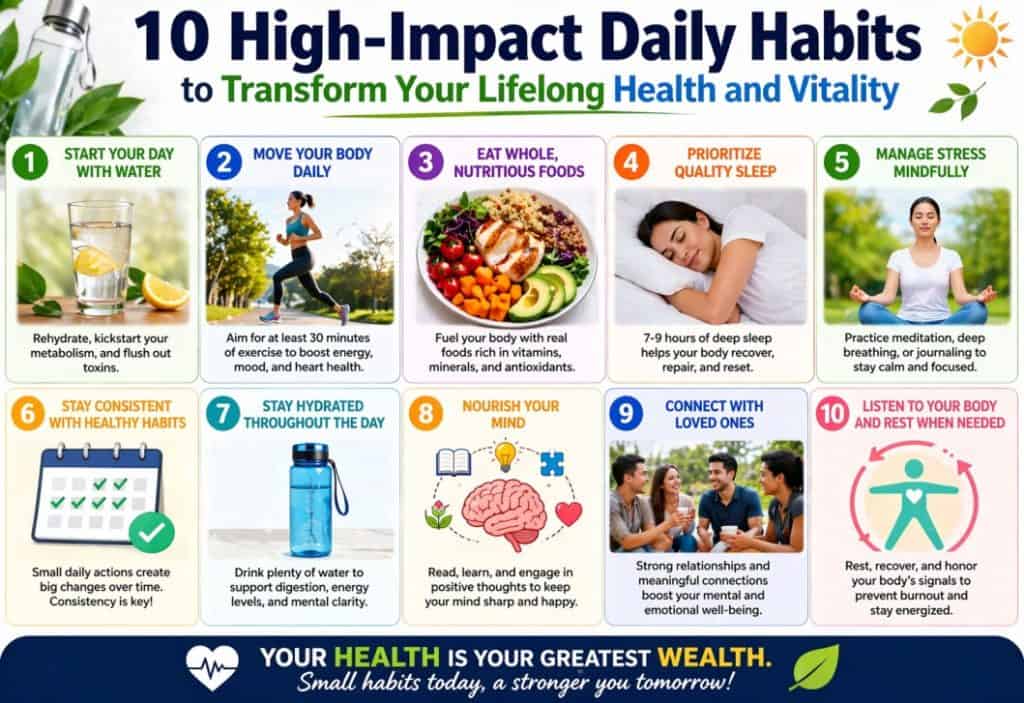

In today’s fast-paced world, achieving lasting health and vitality often feels overwhelming. With endless advice, complicated routines, and quick-fix promises, many people struggle to find a sustainable path to wellness. But the truth is simple: your daily habits shape your long-term health more than anything else.
You don’t need extreme diets or intense fitness programs to feel your best. Instead, small, consistent actions can create powerful, lifelong results. By incorporating the right habits into your daily routine, you can boost your energy, strengthen your body, and improve your mental well-being-naturally that Health and Vitality
Here are 10 high-impact daily habits that can truly transform your health and vitality.
1. Start Your Day with Hydration
After several hours of sleep, your body wakes up dehydrated. Drinking water first thing in the morning helps kickstart your metabolism, flush out toxins, and improve brain function.
A simple glass of water can:
- Increase alertness
- Improve digestion
- Support healthy skin
For an added boost, consider warm water with lemon-it may aid digestion and provide a gentle detox effect. Keep a glass or bottle of water by your bedside so it becomes automatic that Health and Vitality
2. Move Your Body Every Day

Exercise doesn’t have to mean hours at the gym. What matters most is consistent movement.
Daily physical activity:
- Improves heart health
- Boosts mood through endorphins
- Enhances strength and flexibility
Whether it’s walking, stretching, yoga, or a quick workout, aim for at least 20-30 minutes of movement daily. Consistency beats intensity. A short daily walk is better than an occasional intense workout.
3. Eat Whole, Nutrient-Dense Foods
Your body thrives on real, unprocessed foods. Focus on:
- Fruits and vegetables
- Whole grains
- Lean proteins
- Healthy fats
These foods provide essential nutrients that fuel your body and support long-term Health and Vitality
Avoid overly processed foods high in sugar, unhealthy fats, and artificial ingredients. Instead, think of food as fuel and medicine. If it comes from nature, it’s likely good for you.
4. Prioritize Quality Sleep

Sleep is often underestimated, yet it’s one of the most powerful health tools available.
Poor sleep can lead to:
- Low energy
- Weight gain
- Weak immunity
- Increased stress
Aim for 7-9 hours of quality sleep each night. Create a bedtime routine by:
- Limiting screen time before bed
- Keeping your room cool and dark
- Going to bed at the same time daily
Good sleep equals better health, mood, and productivity that Health and Vitality.
5. Practice Mindfulness or Meditation
Mental health is just as important as physical health. Taking a few minutes each day to slow down can have profound effects.
Mindfulness helps:
- Reduce stress and anxiety
- Improve focus
- Enhance emotional balance
You don’t need hours-just 5-10 minutes daily of deep breathing or meditation can make a difference. Sit quietly, focus on your breath, and gently bring your attention back whenever your mind wanders.
6. Get Sunlight and Fresh Air

Spending time outdoors is essential for both body and mind.
Natural sunlight:
- Boosts vitamin D levels
- Improves mood
- Regulates sleep cycles
Fresh air and nature also reduce stress and increase overall well-being.
Aim for at least 10-20 minutes of outdoor time daily, even if it’s just a short walk.
7. Limit Sugar and Processed Foods
Excess sugar and processed foods can negatively impact your health over time.
They are linked to:
- Weight gain
- Energy crashes
- Chronic diseases
Instead of cutting everything out at once, focus on gradual improvement:
- Replace sugary drinks with water
- Choose whole snacks like fruits or nuts
- Cook more meals at home
Small changes can lead to big results.
8. Stay Consistent with Healthy Routines

The key to transformation isn’t perfection-it’s consistency.
Healthy habits work best when they become part of your daily life. Even on busy days, doing something small is better than doing nothing.
Build routines that are:
- Simple
- Realistic
- Sustainable
Over time, these habits become automatic, requiring less effort and discipline.
9. Nurture Positive Relationships
Your social environment plays a major role in your Health and Vitality.
Strong relationships:
- Reduce stress
- Improve emotional well-being
- Increase longevity
Spend time with people who uplift and support you. Even a short conversation or shared moment can boost your mood.
Connection is a powerful form of wellness.
10. Keep Learning and Growing

A healthy life isn’t just about the body-it’s also about the mind.
Continuous learning:
- Keeps your brain active
- Builds confidence
- Adds purpose to life
Read books, learn new skills, or explore hobbies that interest you.
Growth creates fulfillment, and fulfillment contributes to overall vitality.


